
Meditation For Children and Teens
Mindful Meditation
Meditation to channel energy.
Undoubtedly, positivity is abundant in children; but left to itself, it can become destructive. Parents struggle to channel their innate energy and talent purposefully and productively so kids pursue worthier goals than giving lip. One of the most seamless and tested ways of doing this is meditation.
Whether you are trying to help your fidgety eight-year-old child to sit down and focus or attempting to counsel your moody teenager to communicate respectfully, meditation can be that facilitating factor that bridges the generation gap that inevitably develops between parent and child. Several research-backed benefits of meditation can help you tame your child’s (adorable!) wildness, smooth their rough edges, and lend them grace and charm that age may or may not teach them.
Meditation Techniques for Kids
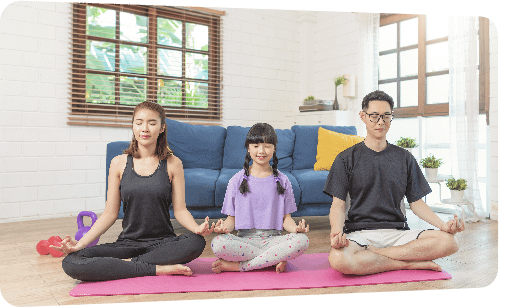
- Observe your breath as if it was your best friend
- Breathe your way into meditation with pranayamas.
- Begin your day with a simple mantra for meditation.
- Chant Sanskrit shlokas to ground children
- 20-20-20: Quick eye exercise
- Meditation to channel energy.
Post meditation tip
When your children are done with their meditation practice, let them engage in creative pursuits like painting.
After meditation, children can sift through the mental clutter and find their creative side. Some kids find the results spilling onto their canvas. See if yours is one of them! You won’t have to thrust it into their schedule and endlessly remind them to practice if they are. They will want to – on their own.
Another immeasurable benefit of meditation is that you will find that your interactions with them are devoid of conflict. Your communication and connection with your kids will become more vital than ever – a priceless benefit, wouldn’t you say?
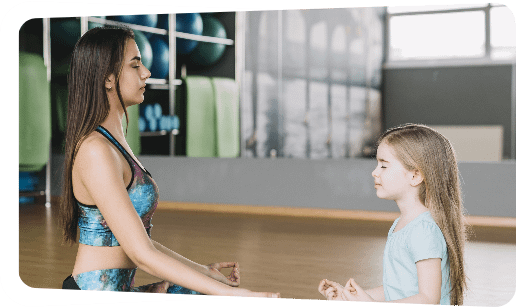
How parents can help kids learn to meditate
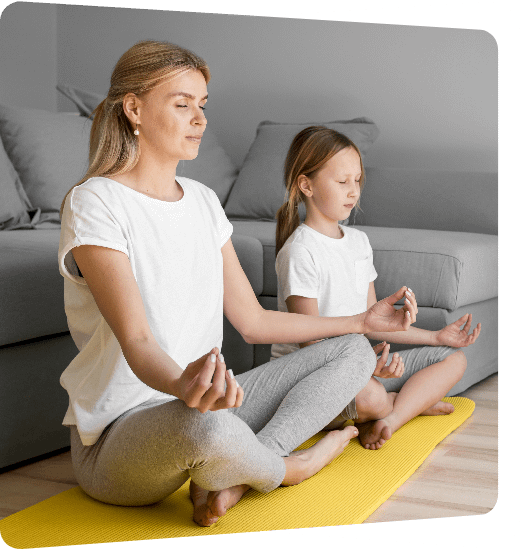
Rather than looking for a hideaway, we might explain our actions and why. Even if they struggle to sit still or close their eyes and giggle, we’re still normalizing the practice and teaching them that meditation is a positive act that benefits our health and happiness. And that’s the goal, isn’t it?
If the little ones don’t seem particularly interested in joining a guided meditation, plenty of other ways to ease kids into the practice exist. Throughout the day, parents or teachers might start to weave in short mindfulness activities for kids, such as creating a mindful bedtime ritual, eating mindfully, practicing deep breathing, or encouraging them to tune in to their senses during a family walk.
While these exercises may not all involve kids sitting still, closing their eyes, and emptying their minds, they will help them understand how to be more present. Once familiar with how to do that, they may have an easier time stepping into a guided meditation, even if it’s just a short 1- or 5-minute practice.
Benefits of Meditation for your kids
Use of meditation for your kids
With meditation, the masked innate nature of your child comes out. And this innate nature is pure and beautiful. And brings joy. In this space, children are relaxed, calm, and energized. Meditation lends focus to the restless child, sensitizes the careless child, composes the nervous child, and softens the aggressive child.
So, it naturally follows that parents should take advantage of this simple tool for their children, especially teenagers, who are naturally moody and restless.
Perhaps the burning question in your mind is, “How do I get my child/teen to meditate? He/she doesn’t want to.” So, we have developed some simple techniques to help you broach the Big ‘M’ with your kid(s). You might find some of the tips we have mentioned useful as well. Since children can mean the younger 8 to 12-year age group and the maturer 13 to 18-year teenagers, we have suggested a few variations for each group with each technique.
People Also Ask
01
Is it good for kids to meditate?
Research on the Benefits of Meditation in Children, Several studies in school settings also show improved attention and behavior.
02
What are the powers of meditation for kids?
Meditation helps children improve their listening, problem-solving skills, deep breathing techniques, and visualization and encourages them to use positive affirmations.
03
What is the mantra for meditation?
Mantra is a Sanskrit term, with “man” meaning “mind” and “tra” meaning “release.” Think of a mantra — a word or phrase you repeat during meditation — as a tool to help release your mind.
04
Which mantra is very powerful?
Om Namah Shivaya – Mantra to Remove Negative Energies
05
What is the rule of meditation?
Watch Your Breath